

How to Roll a Joint Like a Pro
Learning how to roll a joint is simple when you follow the right order. We help you build a clean roll with an easy draw from start to finish. Good results come down to fresh flower, clean paper, a sturdy tip, and patient hands.
Key Takeaways
- Break your buds down to an even, medium-coarse fluffy grind.
- Fold a cardboard filter tip to support the base and catch loose flakes.
- Shape the herb cylinder before tucking the paper edge.
- Tap the base lightly so air passes through without canoe runs.
Setting Up Your Rolling Supplies
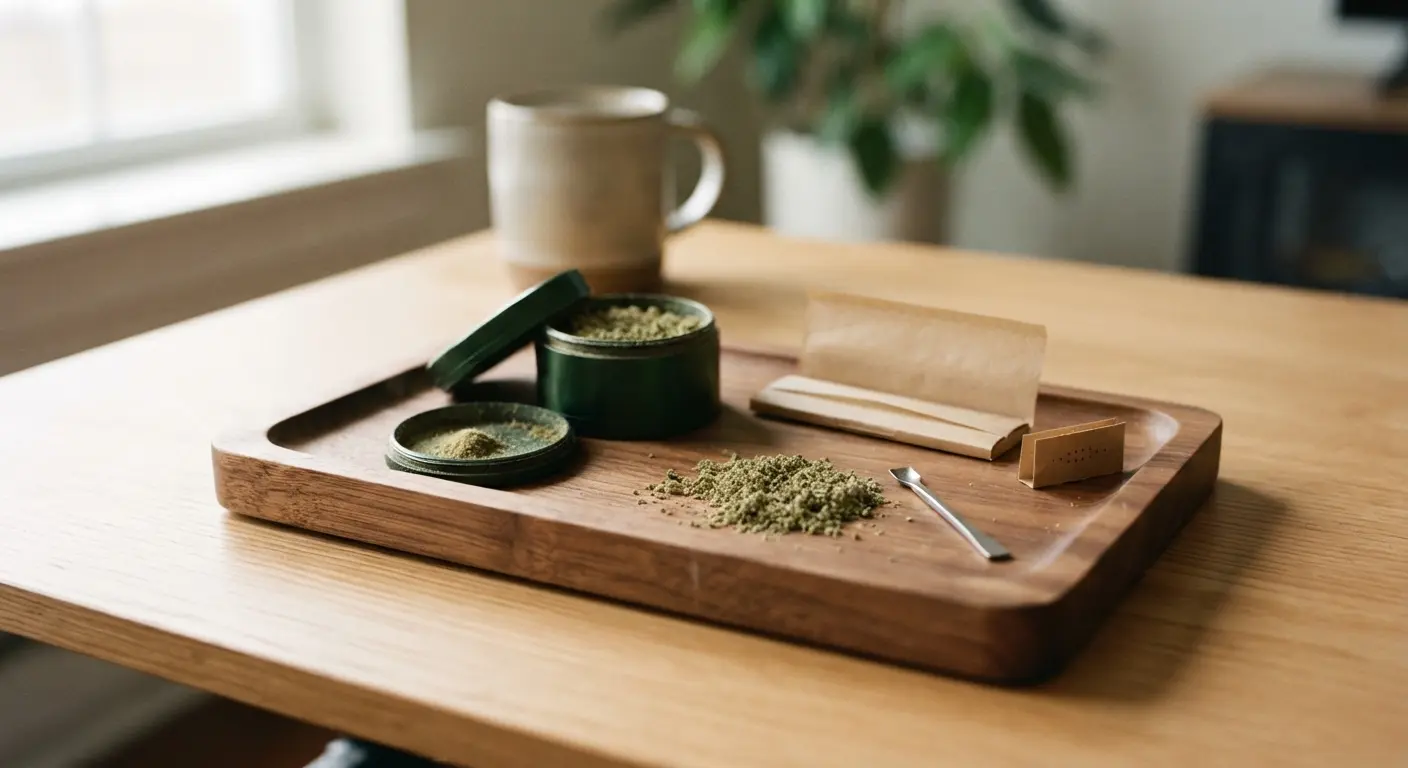
Every smooth smoke starts with the right gear on your table. Keeping your items in one spot protects your ground herb from dust and spills. You can find all the basic tools in simple setups.
Cannabis flower: Most standard rolls use 0.5 to 1 full gram of cured herb. You can check our fresh cannabis flower menu to find sticky options right here in Fort Lee.
Rolling papers: Unbleached hemp papers give you a clean taste and gentle grip. The natural plant fibers hold moisture well, making them easier to handle than slick rice sheets.
Herb grinder: A three-chamber metal grinder shreds flower into even flakes. It also features a bottom screen kief catcher to gather falling trichomes.
Cardboard filter tip: A paper crutch provides a firm mouthpiece. It keeps plant matter out of your mouth and stops the bottom from flattening when wet.
Packing tool: A small wooden poker, chopstick, or pencil lets you tamp down the top without packing the herb too tight.
Step 1: Prepare an Even Grind
Once your supplies are ready, start by breaking down your buds. Strip away hard stems and seeds first so they do not tear your thin paper.
Put the pieces into your grinder teeth and turn the top three to four times. You want a medium-coarse fluffy grind that matches the texture of dried culinary herbs.
Grind size controls how air moves through your roll. Fine powder packs solid and blocks your draw. Big chunks leave empty pockets that burn unevenly. An even shred ensures heat travels down the tube at one steady pace.
Step 2: Build the Cardboard Filter Tip
Now that your flower is ready, build the foundation at the base. A good crutch gives you a clean handle and protects your lips from heat.
Pick up a thin strip of unprinted cardstock. Fold the end back and forth three times to make small accordion folds that look like a “W”.
Roll the rest of the strip firmly around that center fold to make a round tube. The inner folds act as a screen to block loose flower falling out while leaving a wide path for airflow.
Step 3: Fill and Shape the Paper
Take a rolling paper and hold it with the sticky natural gum Arabic strip facing up and toward you. Set your round filter tip right inside the bottom crease on one side.
Spread your ground herb evenly along the rest of the fold. If you want a straight roll, keep the line flat. For a cone shape, place slightly less herb next to the filter and widen the pile toward the open end.
Place your thumbs and index fingers on the outside of the paper. Roll the paper back and forth gently against the flower. This light rolling motion molds the loose flakes into a neat, firm cylinder before you try to seal it.
Step 4: Complete the Tuck and Roll
With the herb shaped into a cylinder, you are ready to close the paper. This step sets the shape of the entire joint.
Roll your thumbs down so the front edge of the paper folds over the herb. Tuck that plain front edge into the crease behind the flower, starting right against the stiff filter tip.
Once the filter end is tucked, slide your thumbs along the seam to tuck the rest of the edge. Roll the body upward until only the shiny glue strip is showing. Keep steady paper tension so no soft pockets form along the body.
Step 5: Seal and Tamp the Body
Moisten the glue strip with a light pass of your tongue. You only need a thin layer of moisture because too much wetness weakens the natural gum line.
Tack the paper down along the seam, starting from the crutch and smoothing outward to the open end. Let the paper sit for ten seconds so the glue sets firm.
Hold the joint straight up by the crutch. Tap the filter against your table three times to settle the herb down against the base.
Take your slim packing tool and tamp the top with gentle pressure. Do not press hard. Over-packing chokes air draw and makes the joint hard to pull.
Step 6: Twist the Top and Light
You will see a small rim of paper extending past the packed herb at the open end. Pinch this excess paper flat between your thumb and finger.
Twist the paper into a small point to close the joint securely. This twisted end holds the flower in place while you carry it.
When you are ready to light your roll, hold the flame just in front of the twisted point and spin the joint between your fingers. Do not put the paper directly inside the flame. Rotating the tip creates an even ring of heat before your first gentle puff. For local legal rules on adult personal possession and where you can consume, review guidelines from the New Jersey Cannabis Regulatory Commission.
Solving Common Burn Problems
Even careful rollers run into burn issues. Knowing what causes these problems helps you fix them quickly.
Fixing Joint Canoeing
Canoeing happens when one side of the paper burns down while the other side stays unlit. This issue occurs when the herb is packed tighter on one side or ground into uneven chunks.
To stop a run, dab a small drop of water on the paper right under the fast-burning side. This slows down the hot edge so the rest of the joint catches up. When you light the joint, keep spinning it to keep the cherry round.
Loosening a Tight Draw
If you draw air and get no smoke, the flower is packed too tightly inside the paper. Roll the joint gently between your palms to loosen the dense flower column. If it stays clogged, slide a thin sewing pin down the center from the open tip to open an airflow channel.
Avoiding Loose Mouthpieces
If ground herb pulls through into your mouth, your filter folds are too loose. Re-roll your crutch with tighter “W” folds. You can also press the filter tip slightly deeper into the paper tube to create a tighter collar around the base.
Trying Advanced Rolling Styles
After you feel comfortable with standard rolls, you can try different shapes to change how your herb burns.
The Inside-Out Backroll
The backroll method cuts down on paper smoke so you only taste pure flower. You place the paper with the glue strip facing down and toward the outside.
Roll the flower, lick the glue line through the single layer of paper, and press it flat. Once the seam dries, carefully tear or burn off the extra flap of paper. This leaves you with only one thin layer around your flower.
The Classic Cone Style
A cone roll holds more herb at the front than at the base. You make this shape by angling the paper diagonally across the filter before rolling. Cones offer large initial puffs that soften as the cherry burns down toward the crutch.
Proper Storage for Fresh Flower and Pre-Rolls
Good rolling technique depends on fresh plant material. Dry flower crumbles into fine dust that burns harsh, while overly wet herb fails to stay lit.
Keep your bulk buds in airtight glass jars away from direct sunlight. Storing herb at proper humidity protects fragile plant terpenes and keeps trichomes intact. You can read plant storage research from NORML to learn how air and light change plant properties over time.
For finished joints, store them inside hard plastic doob tubes or small metal cases. These containers shield the paper from moisture and stop the tube from bending in your pocket. Knowing the difference between pure flower joints, tobacco spliffs, and heavy blunts helps you choose what fits your routine. You can find detailed health information on different smoke methods through the Centers for Disease Control and Prevention. If you need fresh flower or rolling advice, check our contact page or visit our store.
Frequently asked questions
What size rolling paper is best for beginners?
Standard 1 1/4 size papers work best for beginners. They hold roughly a half gram of herb, leave enough room for a filter, and fit easily in your hands.
Can you roll a good joint without a grinder?
Yes, you can break buds apart using clean kitchen scissors or your fingers. Work slowly to pull buds into small, uniform pieces without crushing them flat.
What is the difference between a joint and a spliff?
A joint contains pure cannabis rolled in plant paper. A spliff mixes cannabis flower with tobacco in rolling paper. A blunt wraps cannabis inside a thicker tobacco leaf or cigar casing.
Why does a joint keep going out after lighting?
Joints go out when the flower is packed too tight for oxygen to pass through, or when the herb is too moist. Rolling with an even, fluffy grind keeps airflow moving across the cherry.
Visit Indoor Treez in Fort Lee
Stop by our shop on Route 4 for fresh flower, rolling papers, and quality accessories.
Important State Legal Notice
Cannabis products are for use only by adults 21 years of age and older. Keep out of reach of children. Do not operate a vehicle or machinery under the influence of cannabis. Do not cross state lines with cannabis products; transporting cannabis across state borders remains illegal under federal law.
FDA Disclaimer
These statements have not been evaluated by the Food and Drug Administration. These products are not intended to diagnose, treat, cure, or prevent any disease.